
- Introduction:
We're a student-led team on a mission to solve a problem every student faces: food indecision. Spoonfed brings all campus dining options in one platform, making it easy to explore menus, read honest peer reviews, and discover food options faster. Our goal is to make food decisions smarter, quicker, and more enjoyable for students.
- Problem:
Students face several challenges when deciding where and what to eat on campus:
- Lack of Visibility: They struggle to see which food spots offer what, and how they differ. Without a platform to compare dining options side by side, they are left making decisions with limited information, reducing exploration and informed choices.
- Time Wastage: With multiple food spots offering similar menu items, students waste valuable time deciding where to go. They often rotate between familiar places out of habit, even when better options may be nearby.
- Limited Access to Peer Insights: Honest feedback from fellow students is hard to find. Without peer reviews, students miss out on useful guidance that could help them discover better food spots and avoid underwhelming choices.
- Solution:
At Spoonfed, we’re solving the challenges students face when choosing where to eat on campus. Our platform consolidates all food spots, offering quick access to menus, reviews, and comparisons. Students can compare options, view full menus, and read authentic peer reviews, all in one place. No longer limited to word-of-mouth recommendations or the same familiar dining spots, students can now explore a wider range of options. Spoonfed allows users to break free from routine and make more informed, satisfying food choices each day.
- Market Opportunity:
Students are increasingly turning to digital tools and peer reviews to make quick food decisions, but existing platforms like Google Maps or FoodPanda don’t meet the unique needs of campus life. Spoonfed fills this gap with a platform designed to simplify campus dining.
- TAM (Total Addressable Market): All university students across the country who rely on campus dining options and face challenges with food variety and decision-making, especially first-year students.
- SAM (Serviceable Available Market): Students across different campuses of our own university who rely on campus dining options and would benefit from a platform to explore food choices and read peer reviews.
- SOM (Serviceable Obtainable Market): Students at our own university (EME campus) who are actively seeking an easier way to explore food options, read peer reviews, and make smarter dining decisions.
- Features:
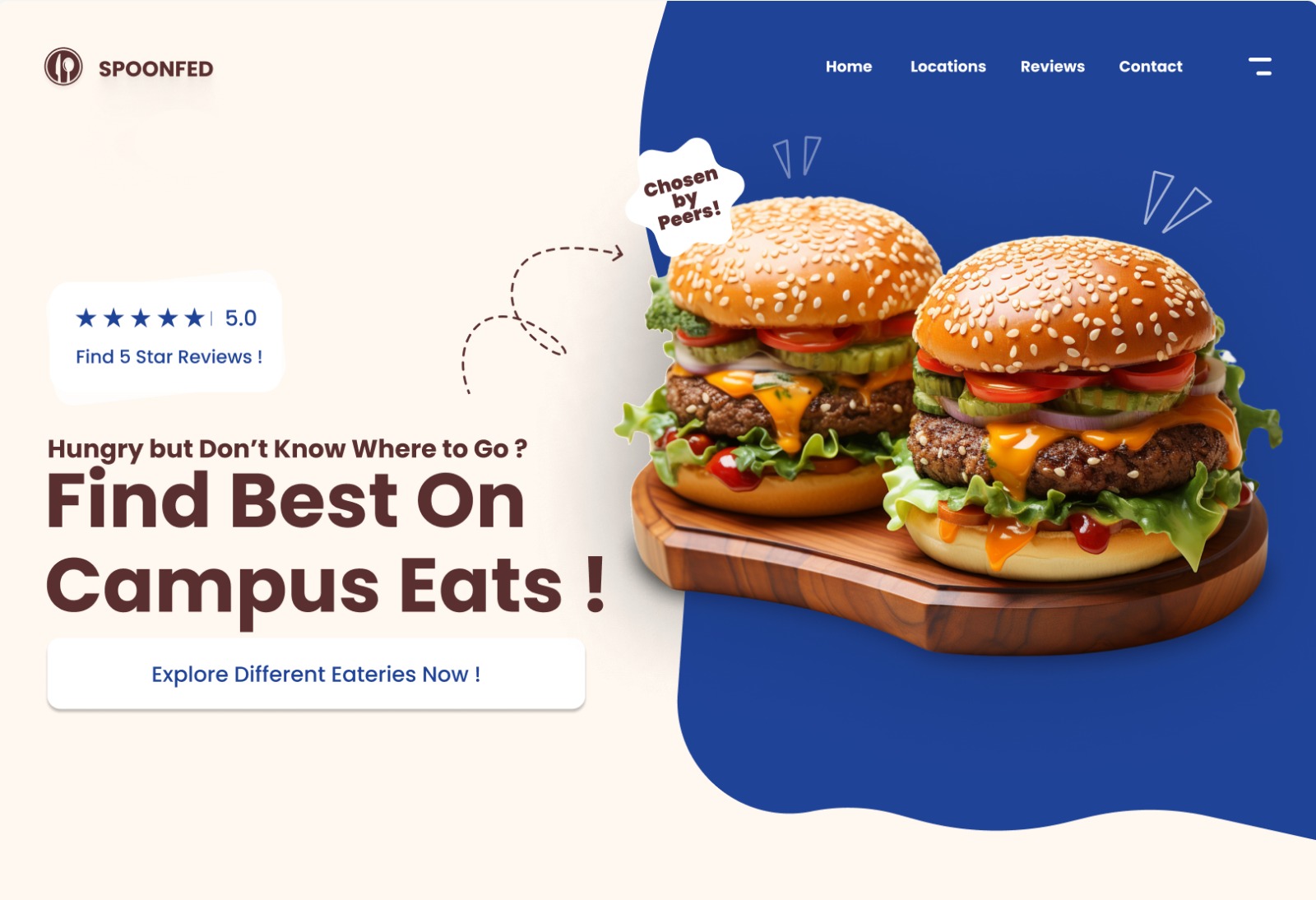
- Easy Navigation: A simple platform design helps students quickly find food spots, view menus, and read reviews.
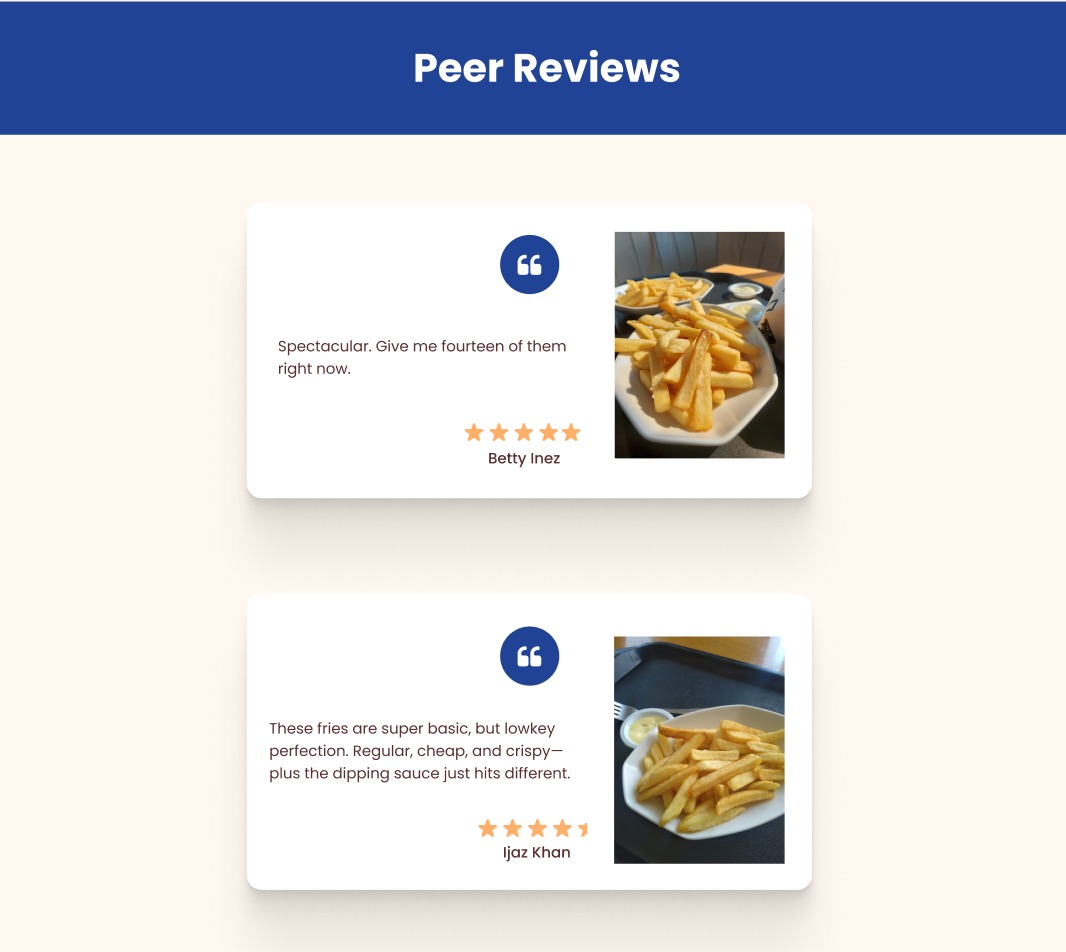
- Peer Reviews & Ratings: Students can rate dishes and share feedback, building a trusted community-driven platform.
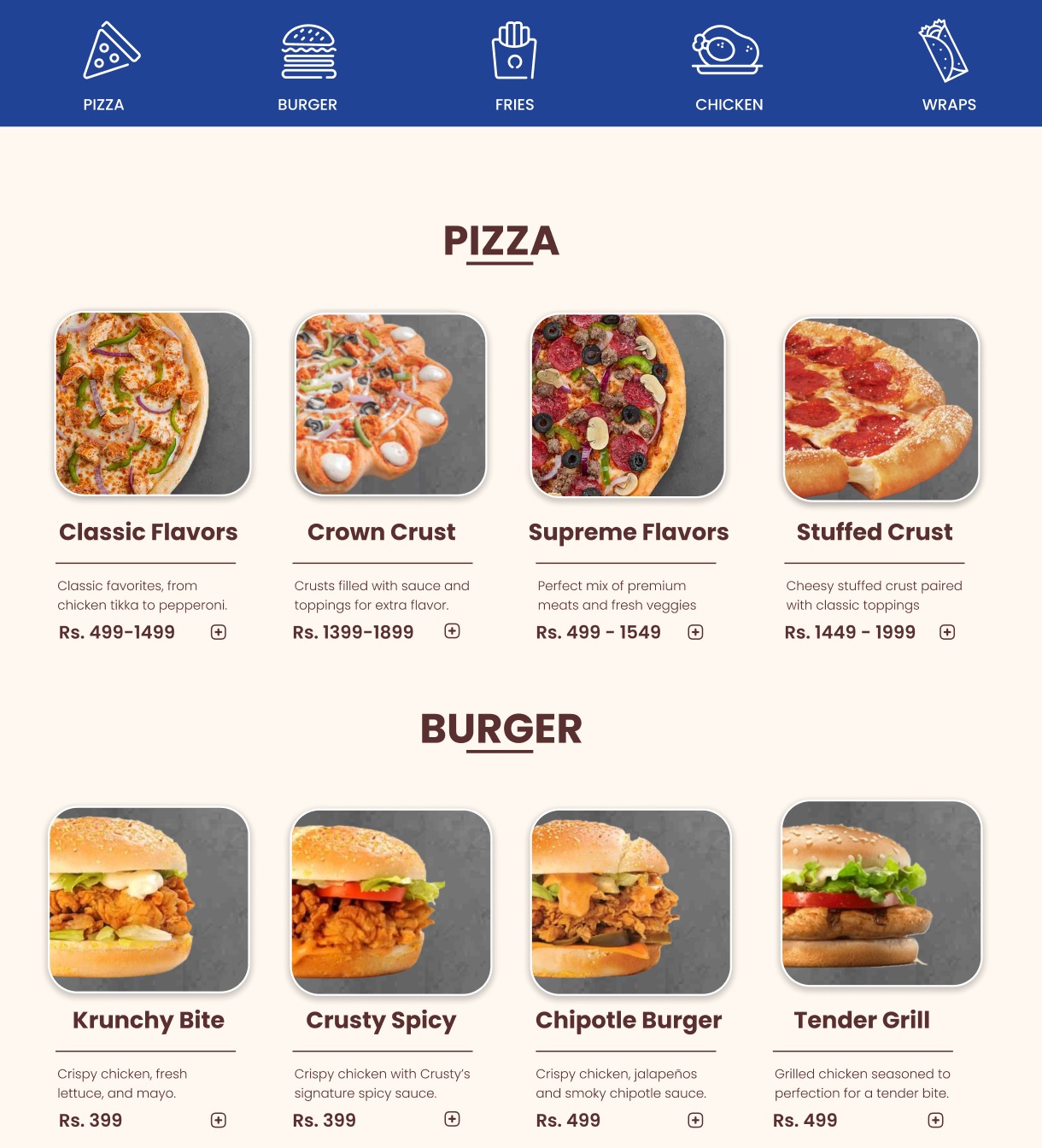
- Quick Access to Menus & Offers: Detailed menus and offers are available on each food spot page, enabling informed decisions.
- Real Student Experiences: As more students contribute reviews, the platform will provide a growing resource for discovering hidden gems and steering clear of underwhelming options.
- Business Model:
- Featured Listings: Vendors can pay to have their cafes featured on the homepage or appear first in search results, increasing visibility and attracting more students, especially for newer spots.
- Promotions and Ads: We’ll offer ad slots for vendors to promote limited-time deals or seasonal offers like "Exam Survival Bundles" or "Lock-In Deals," providing value for both students and vendors.
- Future Ordering & Commission: As Spoonfed grows, we plan to integrate ordering directly through the platform. Spoonfed will take a small commission from cafes for every customer/order we bring them.
- Campus Events and Collaborations: We’ll collaborate with campus events like Winter Fiesta and tech expos, promoting featured vendors in exchange for a small commission from sales.
Go-To-Market Approach We'll execute the plan through three focused phases:
- Phase 1: Launch Spoonfed within our university, prioritizing the most popular food spots to drive strong early engagement. The primary focus will be on delivering a seamless user experience to encourage initial usage.
- Phase 2: Build awareness through student societies, social media campaigns, posters, and word of mouth. Early feedback will be actively gathered and used to refine the platform for stronger engagement.
- Phase 3: As the platform gains traction, bring more vendors onto Spoonfed and encourage and incentivize users to share their experiences to expand the review base. User activity and feedback will not only ensure that a dynamic platform but these metrics will also help us adapt our approach for scaling purposes.
- Traction/Milestones:
- Vendor Interest: We conducted interviews with local cafés to assess their willingness to join the platform. The majority expressed strong interest, believing that Spoonfed’s additional marketing would help attract more students and contribute positively to their business growth.
- Platform Development: The initial website prototype has been completed and is now undergoing final optimizations to ensure all functionalities enhance the user experience ahead of launch.
- Testing and Feedback: Small-scale testing of the platform received positive responses, with students highlighting its simplicity, convenience, and usefulness. In a focused group of 20 students, most said they would actively use the platform, reinforcing strong demand ahead of launch.
- Initial Marketing Efforts: Awareness is being generated through surveys to gauge user interest, alongside recruiting volunteers to provide feedback on the initial website prototype. Marketing efforts will expand upon launch, targeting student societies and campus notice boards both online and offline.
- Competitive Landscape:
| Feature / Platform | Google Maps | FoodPanda | Yelp | Spoonfed |
|---|---|---|---|---|
| Target Audience | General public | City-wide food delivery | Food explorers | University students |
| Campus-Specific | No | No | No | Yes |
| Full Menus of Campus Spots | No | No | No | Yes |
| Student Reviews | No | No | No | Yes (Campus-only) |
| Strengths | Wide coverage, reliable mapping service | Delivery integration, broad options | Broad review base, detailed feedback | Campus-focused, student-specific features |
| Weaknesses | Not campus-specific | Not focused on students, no campus data | Not student-focused | Limited to campus audience |
Why We Stand Out: We’re not just a delivery app. We’re a campus-first guide built for students by students to explore food options, check menus, and read peer reviews. Other platforms aren’t tailored to campus life, but Spoonfed is designed with students and university dining in mind.
- Go-to-Market Strategy:
To acquire and retain users, we will focus on engaging with the heart of student life, including communities, trends, and habits. By leveraging strategies that tap into their daily routines, we aim to create real connections and boost platform adoption.
Marketing Channels
- Instagram & WhatsApp: Create buzz with reels, polls, memes, and use WhatsApp groups for direct communication.
- Campus Ambassadors: Selected students spread the word in their circles, boosting organic reach and trust.
- Café Collaborations: Promote exclusive deals within the app; cafés share us via QR codes, posters, and table cards.
- University Channels: Leverage university notice boards (online and offline) and official email and WhatsApp groups to maximize visibility and credibility.
Retention Tactics
Once we've successfully engaged students, the following strategies will help maintain their interest and keep them coming back:
- Weekly Top Picks & Trends: Regularly highlight trending spots and popular items to keep students engaged.
- Review Rewards & Perks: Active reviewers can earn leaderboard rankings, achievement badges, public shoutouts, café vouchers, and discount coupons at partner food spots.
- Push Notifications for New Deals: Send notifications to keep users informed about exclusive deals, new food spots, or special campus events, ensuring the platform stays relevant and encourages repeat visits.
- Team:
Iman Qaiser – Design & Marketing Lead
- Designs platform UI/UX (Figma, HTML/JavaScript)
- Creates visual assets for social media and marketing
- Develops viral marketing campaigns for student engagement
Iraj Khan – Tech & Operations Lead
- Leads backend development and SQL database setup
- Manages vendor onboarding and partnerships
- Conducts user testing and platform optimization
- Financials / Projections:
Revenue Streams:
- Featured Listings: Vendors can pay to have their cafes featured on the homepage or appear first in search results.
- Promotions and Ads: We’ll offer advertising opportunities for cafes to promote deals, seasonal offers, and combos to students.
- Commission on Orders (Future Integration): As the platform grows, we plan to integrate direct ordering through the website and earn a small commission for each order placed.
Cost Structure:
- Platform Development and Maintenance: Costs for hosting, software updates, and development.
- Marketing and Promotion: Budget for awareness campaigns, promotional materials, and social media content.
- Team and Operations: Salaries and operational expenses.
Runway: We’re working on securing collaborative and financial support from the university to launch the website under their domain for one semester (18 weeks). This support will cover launch and operating costs, while also helping to build brand awareness and drive initial usage. Moving forward, we’ll take on recurring expenses for storage and upkeep to ensure the platform’s sustainability in future semesters.
Forecasts:
- First Semester After Launch: Our primary goal for the first semester is to solidify Spoonfed’s brand presence across all four years and departments, ensuring strong awareness among students. We aim to achieve a high sign-up rate with the majority of students using the platform regularly. Additionally, we will focus on securing partnerships with all campus café vendors, ensuring they are fully represented on the platform.
- End of Year 1 After Launch: By the end of Year 1, we aim to establish Spoonfed as a university norm, with students relying on the platform for their campus dining decisions. We anticipate that vendors will begin paying for premium marketing and advertising opportunities within the platform, creating a new revenue stream. This gradual revenue generation will help fund future growth, with the goal of improving the user experience and strengthening vendor partnerships to attract and retain a loyal customer base.
- The Ask: Spoonfed isn't actively seeking investment at this stage, but we remain open to future discussions. Our current focus is on building a strong, reliable platform for students. As we continue to grow, we welcome support through the following avenues:
- Strategic Mentorship: We value guidance that will help us refine our product, growth strategy, and long-term vision.
- Technical Guidance: Expertise from seasoned developers is crucial as we work to scale and secure the platform effectively.
- Partnerships with University Bodies: Collaborating with university organizations will be key to promoting Spoonfed through official channels, helping us reach a wider audience and drive adoption.
- Vision: We’re reimagining how students connect with food on campus by making it easier, smarter, and more fun. Our goal is to turn everyday food decisions into a shared, informed experience built on real student voices.
This isn’t just about finding the best meal. It’s about building a student-powered food culture.
Built by students, for students because no one knows campus cravings better than we do.
Let’s shape campus life, one bite at a time.
Scroll Less, Eat Better: View Prototype